Sersor

Page content reviewed September 2026

Reseller

Thales Workforce Identity and Access Management

Protect your employees, contractors, and internal systems with strong multi-factor authentication and intelligent access policies - without adding friction to daily work.

Request Pricing and Information

Key Capabilities

Multi-factor authentication (MFA)

Strong authentication for all workforce users using hardware tokens, software authenticators, smart cards, FIDO2 devices, or push notifications - with a wide range of authenticator options to match your security policy and user preference.

Single Sign-On (SSO)

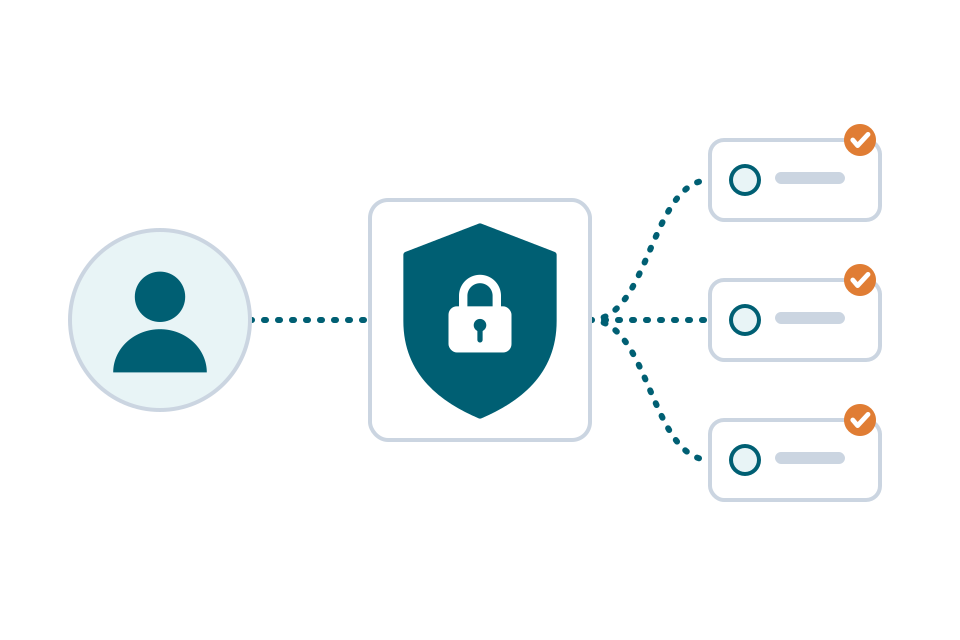
Centralized access to cloud applications, on-premises systems, and SaaS tools through a single authentication event - reducing password fatigue while improving security.

Risk-based access policies

Intelligent access policies that step up authentication requirements based on user behavior, location, device, and risk level - applying stronger controls where needed without impacting low-risk sessions.

Broad application support

Pre-built integrations with hundreds of cloud applications via SAML, OIDC, and RADIUS. Works with Microsoft 365, Salesforce, AWS, Azure AD, and many others.

Certificate-based authentication

PKI-based smart card and USB token authentication for high-assurance use cases such as privileged access, VPN, and government or regulated environments.

Cloud and on-premises deployment

Available as a cloud service (Identity-as-a-Service) or on-premises deployment, with hybrid options to bridge legacy and modern environments.

Why Phishing-Resistant Authentication Matters

Many organizations already have "MFA" and consider the box checked - but CISA specifically distinguishes phishing-resistant methods from everything else. The diagram below shows why a password plus a text message or basic push prompt is not the same level of protection as a hardware key.

PASSWORD + SMS / BASIC PUSH (PHISHABLE) Login Attempt Username + password SMS Code or Push Prompt Sent to the phone - not bound to the genuine website Result: Exploitable A phishing page can relay the code, or flood approval prompts FIDO2 / PKI HARDWARE KEY (PHISHING-RESISTANT) Login Attempt Same login attempt Cryptographic Challenge Device signs a challenge bound to the actual site origin Result: Phishing-Resistant A fake site gets an invalid signature - nothing to steal
Same login attempt, two different verification mechanisms - an SMS code or basic push prompt is not bound to the real site, while a FIDO2 or PKI hardware key cryptographically is.

Backed by Independent Recognition

Leader

G2 Leader in Single Sign-On (SSO) Solutions, Spring 2024

Top

Solution of Q1 2025 - Expert Insights independent review

Leader

KuppingerCole Leadership ranking in passwordless authentication

94%

of surveyed IT organizations reported a good experience with SafeNet Trusted Access - TechValidate customer survey

Thales Workforce IAM Product Lines

SafeNet Trusted Access

SafeNet Trusted Access

SafeNet Trusted Access is the cloud-based access management platform at the center of Thales's Workforce IAM line - it handles single sign-on, multi-factor authentication, and risk-based access policies from one console, so every login goes through the same policy engine instead of a different flow for each system.

It supports adaptive authentication that adjusts requirements to context - location, device, and risk level - so low-risk logins stay frictionless while high-risk ones step up automatically, rather than applying the same fixed MFA prompt to every login regardless of actual risk.

  • Cloud (IDaaS), on-premises, or hybrid deployment
  • Risk-based, adaptive access policies
  • Pre-built integrations for hundreds of SaaS and on-prem apps

Best for: Any organization centralizing SSO and MFA policy across cloud, on-premises, and VPN access under one console.

SafeNet Trusted Access Product Brief ↗
SafeNet eToken Series

SafeNet eToken Series

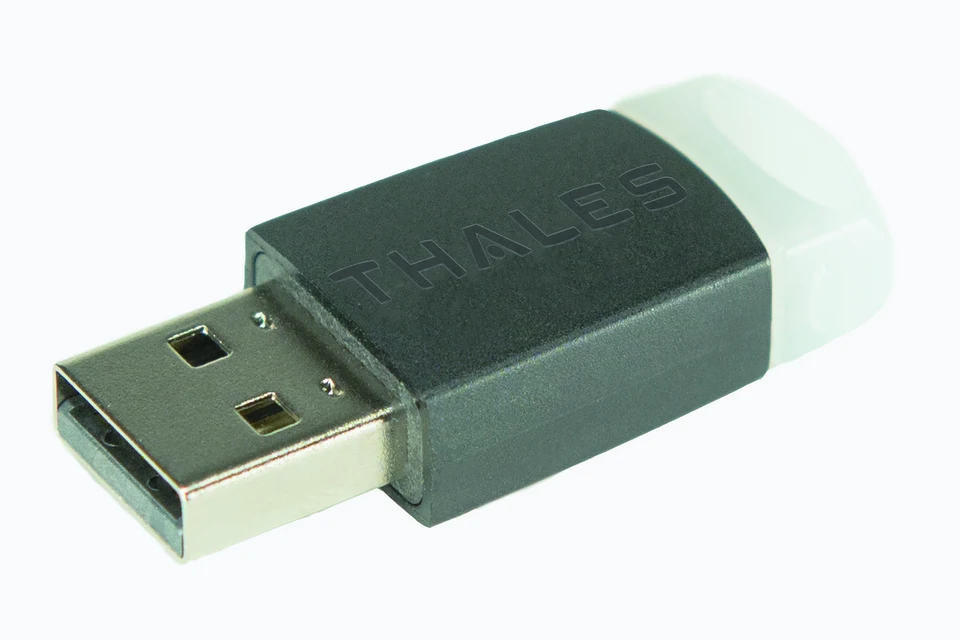
Hardware USB tokens (the eToken 5300 and Fusion series) that hold a private key on a FIPS 140-2 certified chip, requiring physical possession plus a PIN to authenticate - a phishing site or malware on the machine has no key to steal, because the key never leaves the token.

Best suited for privileged accounts, administrators, and regulated environments where a software-only authenticator is not considered strong enough assurance.

  • FIPS 140-2 certified, tamper-evident hardware
  • PKI certificate-based authentication, digital signing
  • eToken Fusion adds FIDO2 support in the same device

Best for: Privileged accounts, system administrators, and regulated environments requiring hardware-backed, certificate-based authentication.

eToken Series Product Brief ↗
SafeNet IDPrime Smart Cards

SafeNet IDPrime Smart Cards

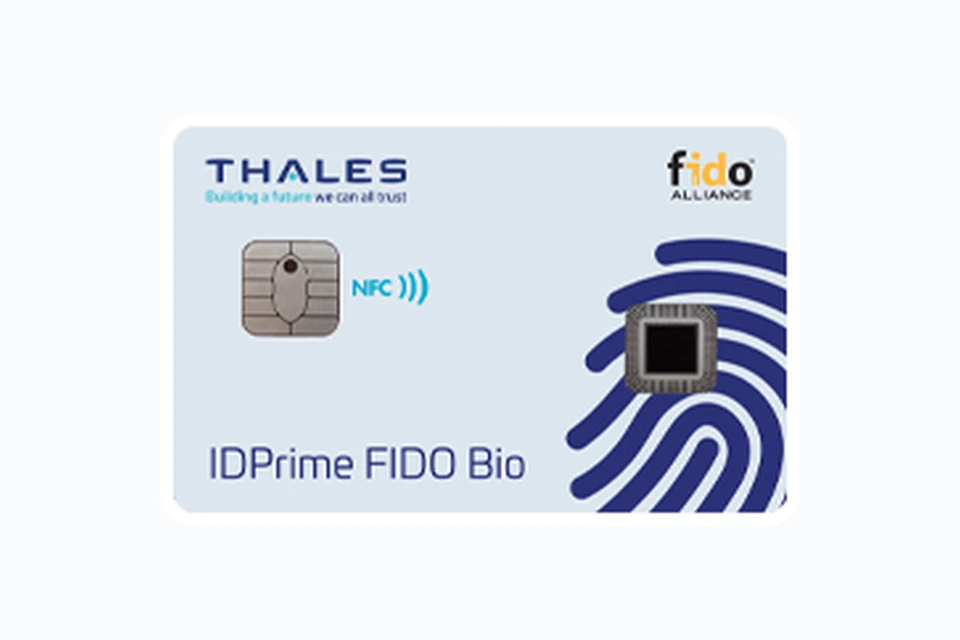
PKI smart cards (IDPrime 940/3940, IDPrime PIV) that combine physical building access, Windows login, and digital signing on one card - a minidriver-enabled card works natively with Windows without extra client software, and the PIV variant meets FIPS 201 for federal, state, and local government use.

Where a USB token is one more thing to carry, a smart card usually replaces a badge an employee already carries every day.

  • Minidriver-enabled - works natively with Windows
  • IDPrime PIV: FIPS 201 compliant for government use
  • Combines building access badge and PKI login on one card

Best for: Organizations that already issue physical access badges and want to combine building access with PKI login; government and regulated agencies needing FIPS 201/PIV.

IDPrime Smart Cards Product Brief ↗
SafeNet FIDO2 Devices

SafeNet FIDO2 Devices

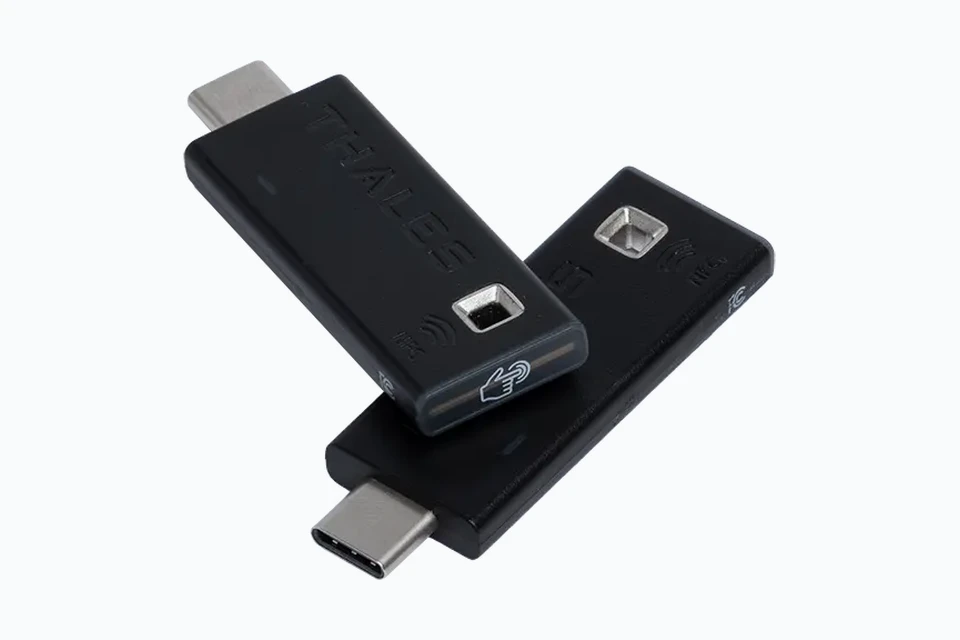
FIDO2/WebAuthn security keys built for the authentication method CISA calls the gold standard for phishing resistance - the device signs a cryptographic challenge tied to the real website's origin, so a convincing phishing replica simply cannot get a valid response out of it, unlike a password or an OTP code a user can be tricked into typing into a fake login page.

Supports passwordless login directly, or as a second factor alongside a password, across Windows, macOS, and any FIDO2-compliant application or cloud service.

  • FIDO2/WebAuthn certified - phishing-resistant by design
  • Passwordless or second-factor login
  • Works across Windows, macOS, and any FIDO2-compliant service

Best for: Organizations moving away from SMS or push-based MFA toward CISA's recommended phishing-resistant standard - especially for administrators and high-value targets.

FIDO2 Devices Solution Brief ↗
SafeNet MobilePASS+

SafeNet MobilePASS+

A software authenticator app for organizations that want strong MFA without issuing physical hardware to every employee - one-tap push approval, OTP generation, and QR-code enrollment from a phone already in every employee's pocket.

It is the practical middle ground between a plain SMS code (which CISA specifically flags as vulnerable to SIM swap and interception) and a hardware token: still software-based, but with number-matching push approval that resists the push-bombing attacks a bare approve/deny prompt is vulnerable to.

  • One-tap push approval with number matching
  • OTP generation and QR-code self-enrollment
  • No hardware to issue, manage, or replace

Best for: Organizations that want strong authentication without a hardware rollout, or as the default option for lower-risk logins alongside hardware authenticators for privileged accounts.

MobilePASS+ Product Brief ↗

CISA states plainly that phishing-resistant MFA is the gold standard and organizations should make migrating to it a high priority effort - while SMS and voice-based MFA should only be used as a last resort. If your workforce authentication today is password plus SMS or a plain approve/deny push, that is the gap FIDO2 and PKI hardware authenticators close.

One Policy Engine, Any Authenticator, Any Cloud

Access management built into a single cloud platform - Microsoft Entra ID, Okta, or AWS IAM Identity Center - ties your authenticator choices to that platform's own ecosystem. Switch or add a second cloud platform later, and MFA policy, enrollment, and authenticators often have to be rebuilt for the new environment, or run as two disconnected systems side by side.

SafeNet Trusted Access sits above the cloud layer: one policy engine and one set of authenticators - from a software app to a FIDO2 hardware key - applied consistently across Entra ID, Okta, AWS, on-premises systems, or any mix of them. Adding a cloud platform later means connecting it to the existing policy engine, not re-issuing authenticators or rebuilding MFA policy from scratch.

Frequently Asked Questions

Workforce IAM (SafeNet Trusted Access) is designed for your employees, contractors, and internal systems - where you control the devices and can enforce specific authenticator policies. Customer IAM is designed for external users of your applications, where the focus shifts to frictionless experience and self-service registration at scale.

Thales supports a very wide range: hardware OTP tokens, software authenticators (mobile app), FIDO2/WebAuthn devices, PKI smart cards and USB tokens, push notifications, and SMS/email OTP. This flexibility allows you to match authenticator strength to the sensitivity of each access scenario.

Yes - Thales SafeNet Trusted Access integrates with Active Directory and Azure AD for user identity synchronization, enabling you to layer strong MFA on top of your existing directory infrastructure without replacing it.

You do not have to replace Entra ID or Okta - SafeNet Trusted Access integrates with both as a third-party MFA and authenticator layer, rather than competing with them. The reason organizations add it: Entra ID and Okta's built-in MFA options are tied to each platform's own authenticator ecosystem, while SafeNet Trusted Access brings one consistent set of authenticators (including hardware tokens and FIDO2 keys) across Entra ID, Okta, AWS, on-premises systems, or any mix - so switching or adding a cloud platform later does not mean re-issuing authenticators to every employee.

It is better than no MFA, but CISA explicitly classifies SMS and voice-based MFA as vulnerable to phishing, SIM swap, and SS7 interception attacks, recommending it only as a last resort. Plain push notifications are vulnerable to "push bombing," where an attacker repeatedly sends approval requests until a user accidentally taps approve. CISA calls phishing-resistant methods like FIDO2 and PKI-based hardware authentication the "gold standard" and recommends organizations prioritize migrating to it, especially for administrators and other high-value accounts.

Get in touch

Request Thales Workforce IAM Pricing

Tell us about your requirements and we will come back with a tailored proposal within one business day. As a Latvia-based Thales reseller, Sersor also provides local procurement, deployment support, and first-line support in your timezone.


* Required field